LMS
LMS
Last updated on 19th May 2026| 13120

- Guide to Becoming an AI Engineer
- Building a Strong Foundation in Mathematics
- Mastering Core Programming Languages
- Understanding Machine Learning Fundamentals
- Learning Deep Learning and Neural Networks
- Gaining Hands-On with AI Frameworks
- Building a Portfolio of AI Projects
- Preparing for AI Engineering Interviews
- Conclusion
Guide to Becoming an AI Engineer
Becoming an AI Engineer is one of the most lucrative and intellectually stimulating career paths available today, but it is not something you can achieve by watching a few weekend tutorials. The tech industry is flooded with people who call themselves AI experts because they know how to type prompts into ChatGPT, but true AI engineering requires a deep, structural understanding of how machines actually learn. Companies building enterprise Artificial Intelligence Training systems are not looking for prompt typists; they are looking for engineers who can architect data pipelines, select the right algorithms, and deploy models that scale seamlessly. This journey requires a disciplined, step-by-step approach, moving from the heavy theoretical math that powers these systems all the way to the practical coding skills needed to build them. Skipping the foundational steps to jump straight into building flashy apps will only result in a shallow skill set that collapses under the pressure of a technical interview. By treating this guide as a strict roadmap, you can systematically build the expertise required to break into this highly competitive field and actually succeed as a professional.
Building a Strong Foundation in Mathematics
Before you write a single line of code, you have to understand the language that artificial intelligence speaks, which is mathematics. You do not need a PhD, but you absolutely must be comfortable with linear algebra, calculus, and probability. Linear algebra is the core of how data is stored and manipulated in neural networks; you are essentially doing high-dimensional matrix multiplications under the hood. Calculus is what allows machine learning models to learn through a process called gradient descent, where the model uses derivatives to minimize its errors. Probability and statistics are crucial for understanding data distributions, evaluating model performance, and making sense of uncertainty in your predictions in Artificial Intelligence Training. Many freshers try to skip this step because it feels like boring schoolwork, but this is exactly what separates real engineers from people who just import libraries without knowing how they work. When your model breaks in production and you need to debug it, you will rely entirely on your math skills to figure out why the numbers are not converging. Staying consistent with math practice ensures stronger preparation, and focusing on fundamentals builds credibility. Over time, this mastery positions you as a fresher who can confidently tackle AI engineering challenges.
Ready to Get Certified in Artificial Intelligence ? Explore the Program Now Artificial Intelligence Online Training Offered By ACTE Right Now!
Mastering Core Programming Languages
- Python as the Primary Tool: Python is the undisputed king of artificial intelligence. You must become highly proficient in Python, focusing on writing clean, efficient functions, understanding data structures like dictionaries and arrays, and using object-oriented programming to keep your code organized.
- Version Control with Git: In a real job, you will never work alone. You must learn how to use Git and GitHub to track your code changes, create branches for new features and ChatGpt-4, and merge your work with other engineers without breaking the main codebase.
- Basic Software Engineering Practices: Writing a script in a Jupyter Notebook is easy; deploying it as production software is hard. You need to learn basic command line operations, how to write reusable modules, and how to use virtual environments to manage package dependencies.
- Essential Data Science Libraries: Raw Python is not enough. You need to master libraries like NumPy for fast mathematical operations, Pandas for manipulating large datasets, and Matplotlib or Seaborn for visualizing your data so you can spot trends and errors before feeding it to an AI model.
- SQL for Data Extraction: AI models are useless without data, and most enterprise data lives in relational databases. You must know how to write complex SQL queries to join tables, filter rows, and extract the exact dataset you need directly from the company database.
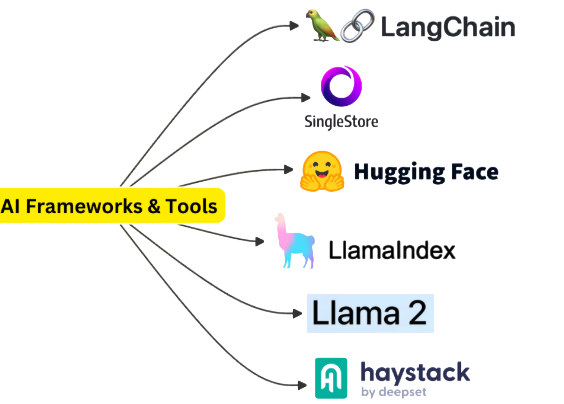
- Mastering PyTorch: PyTorch is currently the most popular deep learning framework in both academia and industry. It allows you to build neural networks dynamically and is incredibly intuitive for debugging. You must learn how to define tensor operations, build custom neural network modules, and write training loops in PyTorch.
- Understanding TensorFlow and Keras: TensorFlow, along with its high-level API Keras, is heavily used in enterprise production environments. While PyTorch is great for research, knowing how to use TensorFlow to deploy models at scale makes you highly attractive to large tech companies.
- Using Hugging Face for NLP: You do not need to build large language models from scratch. Hugging Face is a massive repository of pre-trained AI models and Artificial Intaligence . Learning how to download, tokenize data, and fine-tune these open-source models for specific business tasks is a mandatory skill for modern AI engineers.
- Exploring Scikit-Learn for Classical ML: Before jumping into deep learning frameworks, you must be completely fluent in Scikit-Learn. It is the standard library for traditional machine learning algorithms, data preprocessing, and model evaluation.
- Leveraging OpenAI and Anthropic APIs: In many enterprise jobs, you will not train models from scratch but will instead integrate powerful APIs into software applications. Learning how to securely call these APIs, manage token limits, and handle streaming responses is a critical engineering skill.

Develop Your Skills with Artificial Intelligence Training
Weekday / Weekend BatchesSee Batch DetailsUnderstanding Machine Learning Fundamentals
Once your math and programming foundations are solid, you can finally dive into traditional machine learning. This step is about understanding algorithms that learn from data without being explicitly programmed for every scenario. You need to learn the difference between supervised learning, where you train a model on labeled data, and unsupervised learning, where you let the model find hidden patterns in unlabeled data Why AI Is a Promising Career Option for IT Freshers. You will study foundational algorithms like linear regression for predicting numbers, logistic regression for classifying data, decision trees, and clustering techniques like K-Means. More importantly, you must learn how to evaluate these models using metrics like accuracy, precision, recall, and mean squared error. Understanding why a model is failing is often more important than building the model itself. You also need to master concepts like cross-validation and regularization to ensure your model is not just memorizing the training data but can actually generalize to new, unseen data in the real world. Staying consistent with ML fundamentals ensures stronger preparation, and focusing on evaluation builds credibility. Over time, this mastery positions you as a fresher who can confidently handle enterprise-level AI projects.
To ExploreArtificial Intelligence in Depth, Check Out Our Comprehensive Artificial Intelligence Online Training To Gain Insights From Our Experts!
Learning Deep Learning and Neural Networks
Deep learning is the specific subset of machine learning that powers modern artificial intelligence breakthroughs like large language models and image generators. At this stage, you move beyond traditional algorithms and start building artificial neural networks that are inspired by the human brain. You need to understand the architecture of a basic neural network, including input layers, hidden layers, and output layers and Expolre Top Trending Technologies . From there, you must learn specialized architectures that are revolutionizing industries. Convolutional Neural Networks are the standard for processing image and video data, while Recurrent Neural Networks and Transformers are the backbone of all modern text and language processing. Understanding the mechanics of attention mechanisms is particularly crucial right now because it is the foundation of tools like ChatGPT. This step is heavily math-intensive, as you will be calculating backpropagation by hand to truly grasp how weights are adjusted. Mastering deep learning is what elevates you from a standard data scientist to a true AI engineer.
Gaining Hands-On with AI Frameworks
Looking to Master Machine Learning? Discover the Artificial Intelligence Expert Masters Program Training Course Available at ACTE Now!
Building a Portfolio of AI Projects
Your resume means absolutely nothing in the AI industry without a strong portfolio to back it up. Employers want to see proof that you can take a theoretical concept and turn it into a working application. Stop doing standard tutorial projects like classifying the Titanic dataset or recognizing handwritten digits. You need to build end-to-end projects that solve real-world problems. Build a web application that uses a fine-tuned language model to summarize legal contracts, and AI Applications or create a computer vision system that detects manufacturing defects from live camera feeds. Put all your code on GitHub, write professional README files that explain your architecture choices, and deploy your applications so recruiters can interact with them live. Building just three high-quality, complex projects that demonstrate your ability to handle messy data, train a model, and deploy an interface is far more effective than listing ten generic courses on your resume. Your portfolio is your ultimate proof of competence. Staying proactive with project building ensures stronger opportunities, and focusing on end-to-end solutions builds credibility. Over time, this mastery positions you as a fresher who can confidently showcase enterprise-ready AI applications.
Preparing for Artificial Intelligence Job Interviews? Have a Look at Our Blog on Artificial Intelligence Interview Questions and Answers To Ace Your Interview!
Preparing for AI Engineering Interviews
AI engineering interviews are notoriously difficult and usually consist of multiple grueling rounds. You will face standard coding interviews where you must solve algorithmic data structure problems on a whiteboard or in a shared code editor. You will also face deep theoretical questions where interviewers will ask you to derive the math behind gradient descent or explain the exact difference between L1 and L2 regularization. Beyond the technical screenings, you will be given system design interviews tailored to Artificial Intelligence Training. For example, they might ask you to design the architecture for a real-time recommendation system that serves millions of users, requiring you to discuss data pipelines, model selection, and cloud infrastructure. To pass these interviews, you cannot just rely on conceptual knowledge. You must practice speaking out loud, explaining your thought process, and defending your architectural decisions. Mock interviewing with peers is essential to build the confidence and speed needed to survive these high-pressure conversations. Staying consistent with interview practice ensures stronger preparation, and focusing on communication builds credibility. Over time, this mastery positions you as a fresher who can confidently succeed in AI engineering interviews.
Conclusion
Becoming an AI engineer is a rigorous journey that demands immense discipline and a refusal to take shortcuts. You cannot fake your way through the math, and you cannot bluff your way through a system design interview. By strictly following this step-by-step roadmap, from mastering linear algebra to deploying deep learning models with PyTorch, you build an unshakable foundation that will last your entire career. The tech industry is incredibly ruthless at filtering out candidates who only possess surface-level knowledge. However, if you put in the hard work to understand the mechanics behind the code and build a portfolio of complex, end-to-end projects, you will stand out in a sea of applicants. The demand for true Artificial Intelligence Training engineers who can actually build, scale, and deploy these systems is only going to increase over the next decade. Stay patient, embrace the complexity of the mathematics, and keep coding. Your dedication will ultimately pay off with one of the most rewarding and future-proof careers in the modern world. Staying disciplined with fundamentals ensures stronger opportunities, and focusing on persistence builds credibility. Over time, this strategy transforms you from a fresher into a professional who can confidently thrive in AI engineering.